Important notice - We are aware of a scam where people are impersonating CMD Recruitment to offer jobs via WhatsApp & Telegram. This is a scam, CMD Recruitment will never contact new candidates via these methods. Any legitmate offer from CMD Recruitment would be made via a telephone call.

June 25, 2025
Recruitment in 2025 centres on skills-first hiring, smarter use of AI, and raising the bar on candidate experience. Employers that invest in employer brand, communicate clearly, and use data ethically will attract stronger applicants and retain them longer.
If you want to make sure you have access to the best workers in 2025 and beyond, you need to make sure your hiring practices are up to scratch. Keeping up to date with the latest trends will help to ensure you don’t get left behind.
Recruitment trends are changing all the time. So if you want your organisation to stand out, then you need to be willing and able to keep up with the times. Not only will this help you to connect with the workers with the highest potential, but it will also maintain your reputation for being an employer to watch.
This status can dramatically transform your hiring practices, allowing you to attract prospective employees without any outreach. If you’re ready to level up your hiring practices in 2025, make sure you’re aware of the following recruitment trends…
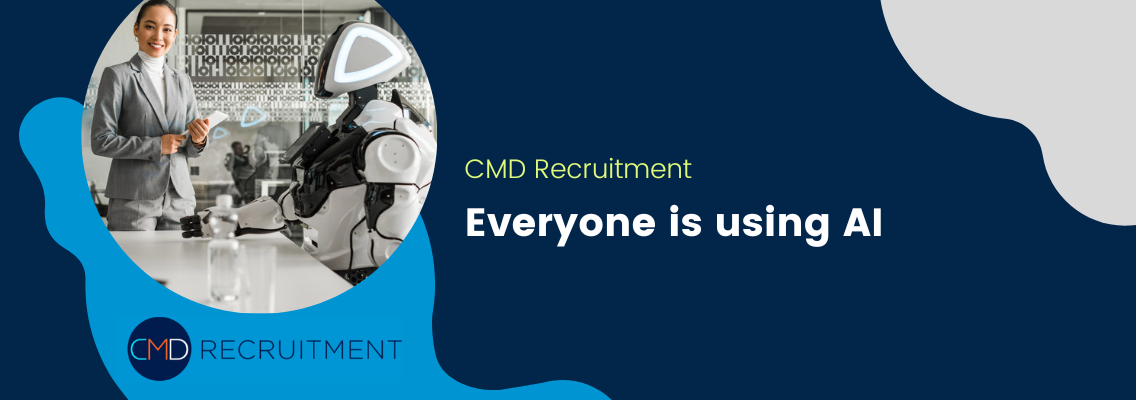
When we talk about AI within the recruitment sector, we are often talking about how employers can use it to streamline their efforts and make their HR departments work more efficiently.
But when we say that everyone is using AI, we mean everyone. While you might be adopting AI within your HR practices, you also need to remember that employees are adopting AI for their job search.
Candidates can quickly churn out highly targeted CVs and cover letters that are perfectly aligned to a job description. This could lead them to stretch the truth a little, simply because they aren’t checking the output.
Accuracy from AI generated content is going to remain a problem for both employers and employees. From an HR perspective, it means that you’ll have to be extra stringent in ensuring that candidates truly do meet the requirements of the job role.
This could mean introducing more aptitude testing ahead of interviews or in tandem with interview stages. Testing can help weed out the candidates that have used AI to get a foot in the door with a highly optimised CV or cover letter.
Job candidates are naming and shaming employers who engage in less than optimal practices during the recruitment process. Ghosting is perhaps the worst of all of them. This refers to when an employer takes a candidate through the interview process only to go silent when they are waiting for an answer.
There are many reasons an employer might ghost a candidate. Perhaps you’ve gone with a different candidate and simply forgot to let the other candidates know. Or maybe the job opening is no longer required, and you’d rather not admit this publicly.
All of the possible reasons for ghosting point to a lack of planning and failure to consider the recruitment process as a whole. Candidates deserve to be kept in the loop every step of the way. If you’d be frustrated to offer a candidate a role, only to have them ghost you without explanation, then it isn’t fair to treat candidates the same way.
In 2025, employers are doing everything they can to stand out among the competition, and tidying up hiring practices is a great way to achieve this. Showing courtesy to candidates by keeping them informed, even if they have been successful, should be the bare minimum expectation for employers.
Focus on capabilities and structured assessments to widen access, reduce bias, and improve quality of hire across teams and locations.
Blend automation with recruiter expertise—let tools handle the repetitive work while people build relationships and make informed, ethical decisions.

Across the pond, we may have seen DEI practices targeted and gutted in the name of efficiency, but DEI is alive and well elsewhere in the world.
Many companies with links to the US found they had to rebrand their DEI programmes, in order to avoid criticism. However, others have doubled down and made it clear that they’ll be continuing to prioritise diversity, equality and inclusion in the workplace.
For many companies, this is an opportunity to move away from the idea that this is something they have to do and instead frame it as something they get to do, or even want to do.
We know that DEI policies help to foster more innovative workplaces. It can also help to increase employee engagement and retention. And companies that prioritise DEI also enjoy improved financial outlooks compared with those that don’t.
There’s no denying that DEI is alive and well in 2025 and continuing to correct decades of neglect in hiring practices.
Your company brand is one thing. But what about your employer brand? How employees see your organisation is vital for 2025 and beyond. This is about so much more than free snacks in the break room.
Your employer brand can make or break your recruitment plans, as this will shape opinions of your company before candidates even apply. If you have a strong employer brand, the best candidates will know about you before they even submit their CV for consideration.
If you’re known for being a fair and supportive employer, guess what? You’ll attract the best workers. But if your employer brand casts you in a negative light, you might only attract those who are desperate for work, and willing to overlook the negatives for a pay cheque.
A strong employer brand is not only linked to effective recruitment, but it can also help to boost employee retention, which will drive down recruitment costs over the years.
Don’t think you have an employer brand? Think again. Ask for anonymous feedback from your employees and you’ll soon see how your company is viewed. Don’t love what you hear? This is a sign that you need to spend some time reflecting on why you do what you do and what steps you can take to improve conditions for your workers. The good news is that every company has an opportunity to turn their employee brand around with some positive action.

Data can help to unlock insight that can transform your business, but only if you know what you’re looking at. Using data-driven insight to make smarter hiring decisions is set to be huge in 2025 and beyond.
Many companies already have the data, they just don’t have the means to extract insight from it just yet. But there’s plenty of insight to be found, if you’re willing to go looking for it.
Insight could help you to shake up hiring practices and stop making hiring mistakes that lead to high employee turnover. It could also help you to identify opportunities to promote candidates internally.
Data could also help you to understand if workers are more productive when working from home, in the office, or in a hybrid working arrangement. Unlocking greater productivity could help to increase staff retention, boost output and increase profitability.
| Topic | Key Point |
|---|---|
| AI in hiring | Automate repeatable tasks for speed and consistency, with recruiter oversight on shortlists and offers. |
| Skills-first approach | Shift emphasis from credentials to capabilities using work samples and structured assessments. |
| Candidate experience | Commit to timely updates, clear next steps, and constructive feedback to reduce dropouts and reneges. |
| DEI focus | Sustain structured, fair processes and measurable inclusion outcomes, even as language evolves. |
| Employer brand | Align promises with day-to-day experience across ads, interviews, onboarding, and development. |
| Flexible work | Provide role-based hybrid options and clear norms tied to customer and team outcomes. |
| Pay transparency | Share ranges where possible and explain progression pathways to build trust early. |
| Data ethics | Be clear about what data is used and why; apply retention limits and audit automated decisions. |
The office versus home working debate is raging on, but it doesn’t have to be either/or in your workforce. In 2025 and beyond, you might find that giving workers a choice is the more popular solution to this modern problem.
Rather than pushing home working on a team that likes to socialise, or forcing those who work better alone back into the workplace, why not listen to employees and let them work in a way that is best for them?

Many employers are waking up to the idea that the 9-5 working week is an outdated and archaic practice that was based on optimising working hours for physical labour. Workers are often more productive when they are given the chance to work within their natural peaks of productivity.
Most people experience a spike in productivity potential in the morning, followed by a slump after lunch. Others might experience another spike in productivity after dinner time.
Rather than clock watching and demanding that workers put in a specific number of hours, many employers are instead giving their employees the freedom to work in whatever way suits them – provided they get the job done.
At the end of the day, this is the only metric that should matter to the employer, not the number of hours of labour completed. Employees who finish their work efficiently shouldn’t be punished by being asked to pick up the slack for other workers.
We’re at a pivotal point in history, navigating the end of a pandemic and the rise of widespread automation with AI. These changes have fundamentally changed the workplace forever, and employers need to ensure they aren’t left behind.
There’s no denying that AI is going to transform recruitment, but hopefully this will also help to stamp out bad practices like ghosting. We could also see greater emphasis on DEI policies, as a kind of overcorrection in response to backlash against DEI in some parts of the world. It will also be important to keep AI in check and ensure bias and discrimination aren’t allowed to return to the workplace.
The way we work is also changing, including where we work and how long for. Being open to changing trends can help employers to develop a strong employer brand – one that gets it. All of these factors combined can help to increase employee retention, driving down hiring costs and boosting productivity.
Stay ahead of the curve by building a recruitment strategy that reflects the latest trends. Post your vacancy with CMD Recruitment and attract the talent your business needs to thrive in 2025 and beyond.