Important notice - We are aware of a scam where people are impersonating CMD Recruitment to offer jobs via WhatsApp & Telegram. This is a scam, CMD Recruitment will never contact new candidates via these methods. Any legitmate offer from CMD Recruitment would be made via a telephone call.

October 5, 2025
Quick Answer:
When evaluating a job offer, compare both salary and benefits by assigning value to each element so you can determine the true overall compensation package.
Key Takeaways
A key part of accepting a new job offer is negotiating your salary. When you are in demand, you have the opportunity to negotiate before accepting a role, so it’s important to pay attention so that you get what you deserve.
Companies will often offer a combination of salary and benefits, but it can be difficult to determine the value of these benefits. So if there are two roles available, comparing salaries directly can be incredibly difficult.
In this guide, we’ll look at what companies offer a combination of salary and benefits, how to assign a value to each, and how to determine if the job offer is really as good as it seems. Read on to learn more about this increasingly common business practice.
There are a number of reasons companies may offer benefits in addition to salary. The most common reason is to attract and retain employees. In a tight labour market, good workers are in high demand, so companies need to find ways to sweeten the pot. This can help to make their company more attractive and outpace the competition.
Benefits can also be used as a tax deduction for the company, which means they will actually save money by offering them. If a company has a smaller budget to work with, it might be able to increase the value of a role by offering more benefits. This is particularly useful for non-profit organisations which might not be able to compete with for-profit organisations.
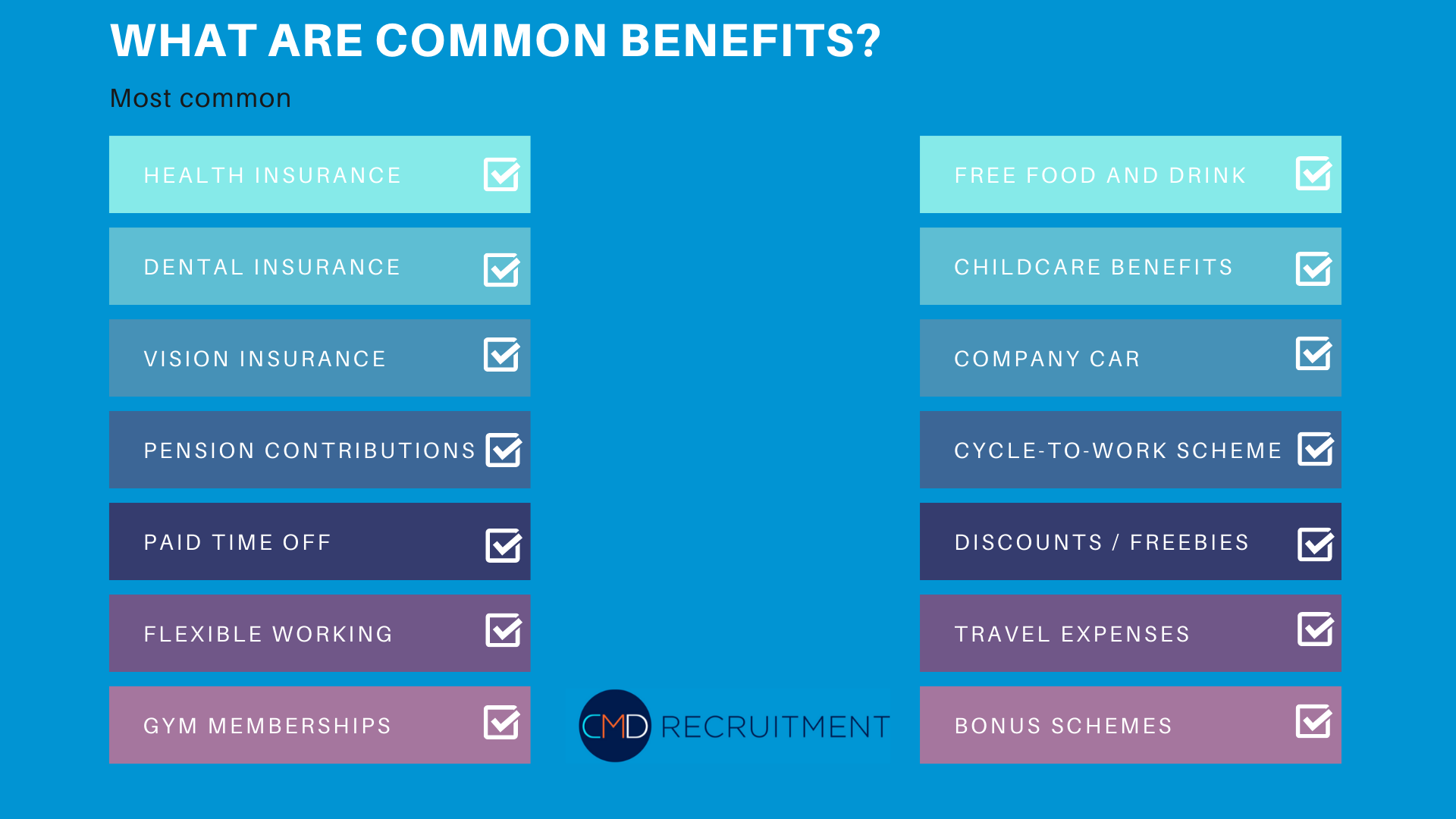
There are many different types of benefits companies can offer, but some of the most common include:
If you are trying to compare a basic salary to a salary with added benefits, you need to be able to assign a monetary value to the benefit. This can get difficult when it isn’t something that can be purchased.
For example, it’s easy to assign a value to something like health insurance, as this is something you could purchase independently. But it’s more challenging to assign a value to something like flexible working or a four-day working week.
When we’re talking about time or benefits that simply improve our lives, we have to get a little more creative so we can make direct comparisons. One way to do this is by looking at the salary you would need to earn to cover the cost of benefits.
For example, if a company offers free healthcare worth £5,000, then this is the equivalent of a £5,000 raise. This method isn’t perfect, as it doesn’t take into account the fact that some benefits are more abstract.
Some benefits, such as flexible working, are more difficult to assign a monetary value to. This is because the value is more abstract and can differ from person to person. When you’re trying to work out the value of these benefits, it can be helpful to think about how much they would improve your quality of life.
For example, if you have children, flexible working would be incredibly beneficial, so it would have a much higher value than something like free drinks on a Friday afternoon. Similarly, if you have a long commute, being able to work from home a couple of days a week would be worth more to you than it would be to someone who lives close to the office.
When you’re trying to compare two job offers, it’s important to take into account both the monetary and non-monetary value of each role. A great way to do this is with a spreadsheet.
Put the perks in a column and then assign each one a value based on how much it would cost you to purchase that benefit. If a benefit does not have a monetary value, assign it a value between £0 and £500. For example, if you’d like to work from home 2 days a week, and a company is offering this perk, you would assign it a value of £500.
When you have finished, add up the value of each compensation package and you will then have a direct comparison. The most important thing to remember is that there is no right or wrong answer. It depends on your individual circumstances and what you value most in a job.
If you place a high value on salary, then you should accept the role with the highest salary. But if you place a high value on benefits, then you should accept the role with the benefits that would most improve your life.
There is the temptation to place all of the value on money, but there are some things that money can’t buy. The most obvious one is time. You can’t buy back any time that you have lost on a long commute or long working hours.
So before you accept the role with the impressive salary but the long commute, consider if you would be better off accepting a role with a slightly lower salary that would let you enjoy a four-day working week.
It can be difficult to make a decision between salary and benefits. But if you take the time to consider what you value most, you will be able to make the best decision for you.
It refers to evaluating job offers by comparing both salary and benefits to understand the true value of a compensation package.
Looking beyond salary ensures candidates make informed decisions that align with their financial needs and lifestyle preferences.
Job seekers can choose roles that suit their priorities, while employers can attract talent by offering competitive and meaningful benefits.
Looking for your next career opportunity?
CMD Recruitment works with employers and candidates across Wiltshire, Bath, Bristol and the wider South West.
Browse the latest job vacancies or speak with one of our recruitment consultants today.
About the Author
CMD Recruitment Career Team
This article was written by recruitment specialists at CMD Recruitment, a UK recruitment consultancy supporting employers and candidates across Wiltshire, Bath, Bristol and the wider South West.
The team regularly shares insights on recruitment trends, hiring challenges and career advice to help professionals navigate the evolving job market.
Reviewed by senior recruitment consultants at CMD Recruitment.